


Cabling Built for Industrial Environments
Triad Power & Controls provides structured cabling installation for manufacturers and processors in Greensboro, NC, and throughout the Carolinas and Virginia. We plan every structured cabling installation around the demands of an industrial facility.
A plant floor can be hard on network cable. Motors and variable frequency drives generate electrical noise that can interfere with data signals, and prolonged exposure to heat and vibration can loosen connections. Where conditions call for it, we use shielded cable and industrial-rated connectors, while maintaining appropriate separation between data cables and power conductors. For long runs between buildings, we use fiber-optic cable, which is not affected by electromagnetic interference.
As an industrial electrical and controls firm, we can coordinate your network cabling with the power and controls infrastructure it supports. As a UL 508A certified panel fabricator, we can also build custom network enclosures in our 9,000-square-foot shop to protect switches and patch panels on the plant floor.
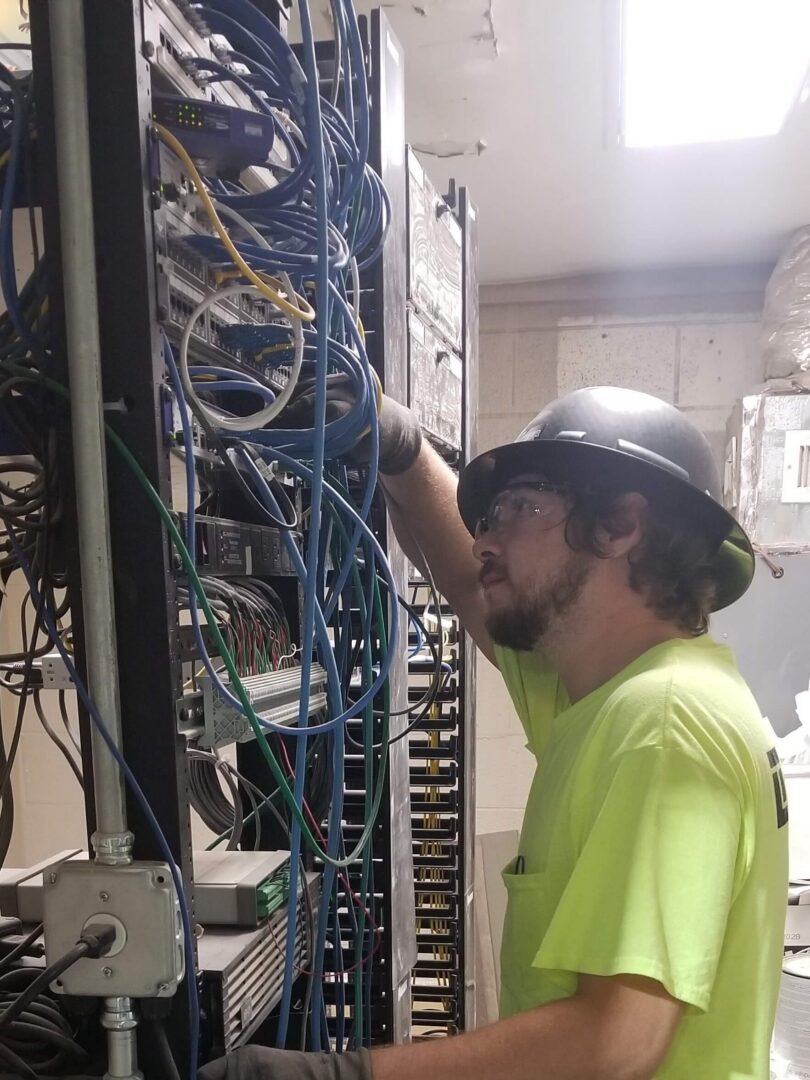
We plan each structured cabling installation around your production schedule, including work during shutdowns or between shifts. Our technicians identify routing or termination issues early, helping reduce delays during startup. We test and label every run and provide documentation to support future maintenance and troubleshooting.
Our crews follow site-specific safety requirements, including required training and specialized PPE. Many of our client relationships span more than 20 years, and we remain available for support as your network grows. If your facility needs a dependable partner for network infrastructure, contact our team today to discuss your next project.
FAQs
What is the difference between Cat6 and Cat6A cable?
Cat6A supports 10-gigabit speeds over the full 100-meter channel, while Cat6 supports those speeds only over shorter distances. Cat6A also resists interference from nearby cables, which can matter in crowded industrial pathways. For new installations expected to last many years, Cat6A is often the more future-ready choice.
Should we choose single-mode or multimode fiber?
Multimode fiber is typically used for shorter runs inside a building and can be paired with less expensive equipment. Single-mode fiber carries signals much farther, which makes it a common choice for links between buildings on a large campus. We help you evaluate distance, equipment costs, and network performance requirements to select an option that supports your current and long-term needs.
What should we do with old, abandoned cable?
Unused cable left in ceilings and cable trays adds fire load and can make troubleshooting harder. The National Electrical Code generally requires removing accessible abandoned cable, and inspectors may flag it during renovations. We can identify and remove unused cable as part of an upgrade.